
Stroke in Dogs: Understanding Signs, Causes and What Owners Should Know

Can dogs have stroke?
It used to be thought that strokes only occurred in humans. While strokes are far more common in humans, advances in veterinary medicine and imaging now allow vets to diagnose strokes in pets more accurately than before.
The good news?
Strokes in dogs are still relatively uncommon and many dogs can recover well with proper medical care and rehabilitation. Understanding the basics can help you recognise warning signs early and seek the right care quickly.
What is a Stroke?
A stroke (as called a cerebrovascular accidents (CVA)) happens when blood flow to part of the brain is disrupted, either by a blood vessel blockage or bleed. This can temporarily or permanently affect how the brain functions. And the extent of the damage and its impact on the dog varies depending on the size and the part of the brain affected.
Types of Stroke in Dogs

Ischemic stroke: A blockage in a blood vessel reduces blood flow to part of the brain.
Hemorrhagic stroke: A blood vessel ruptures and causes bleeding in or around the brain.
Causes of Stroke: Human vs Dogs
Unlike humans, most dogs do not get strokes due to lifestyle conditions likek high blood pressure, high cholesterol, diabetes and heart disease. In dogs, strokes are more often linked to underlying medical conditions, such as heart disease, kidney disease, hormonal conditions or blood clotting disorders.

Risk factors

Therefore, this is why strokes in dogs are much less common than in humans and why proper veterinary investigation is essential.
*Breed trends associated with certain underlying conditions that may lead to stroke
(DISCLAIMER!) The breeds listed below are general trends observed in veterinary studies, often linked to underlying medical conditions rather than the breed itself. Many dogs in these breeds never experience neurological disease.

Having a breed association does not mean a dog will develop a stroke. Regular veterinary check-ups and early management of underlying conditions play a much larger role in reducing risk.
How the Brain affects Stroke Symptoms?
- Neuroanatomy Simplified!
Disclaimer:
This is a simplified overview. Neurological signs often overlap, and only a veterinarian can accurately localise and diagnose brain conditions.
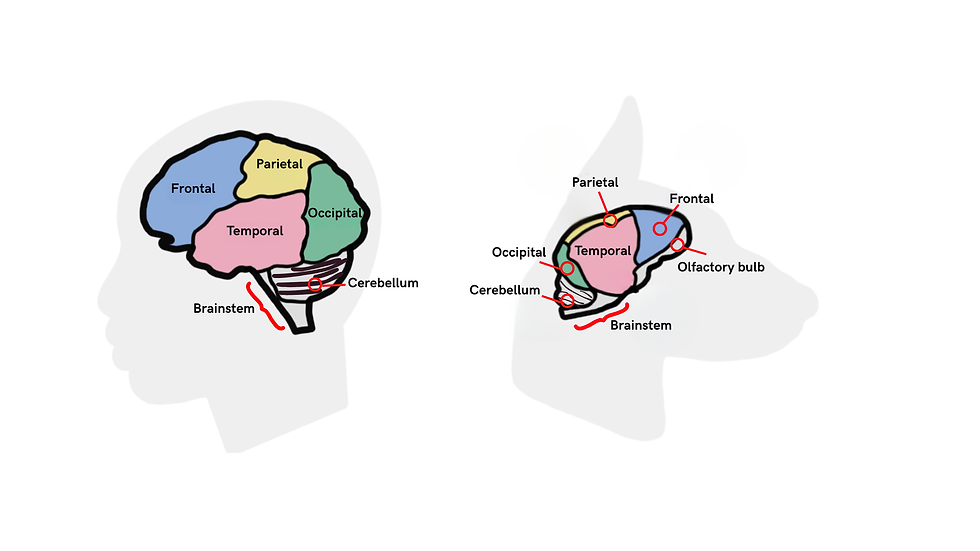

Different parts of the brain control different functions such as balance, movement, vision, behaviour, and awareness. This is why strokes can look very different from dog to dog. Some dogs may lose balance, others may become disoriented, and some may have difficulty walking or coordinating their movements. Every stroke is different, and symptoms depend on which part of the brain is affected.
Signs & Symptoms
A helpful way to spot strokes in humans is the BE FAST acronym. Dogs don't show stroke symptoms in the same way humans do, but there are warning signs you can look out for. We have adopted the BE FAST acronym for humans and adapted it fit the dog's signs and symptoms. The table below breaks down each part of BE FAST and what it might look like if your dog is having a stroke.

Some of signs (such as circling or head tilt) can also occur with other neurological conditions (such as vestibular disease or seizures), so veterinary assessment is essential.
What to Do if You Suspect a Stroke in Your Dog?
Keep your dog safe and prevent injury
Contact your veterinarian as soon as possible
Follow your vet’s investigation and treatment plan
Ask about rehabilitation and recovery support (will be covered in Part 2)
Key Owner Takeaways for Dog Owners:
Strokes in dogs are uncommon
They usually happen due to underlying medical conditions
Early vet care makes a big difference
Recovery is possible
Rehab can support quality of life and mobility
Every dog’s recovery journey is different
What's Next: Stroke Recovery and Rehabilitation in Dogs (Part 2)
In part 2, we will be exploring more on the role of physiotherapy in canine stroke rehab, and what you can do at home! Stay tuned!


Comments